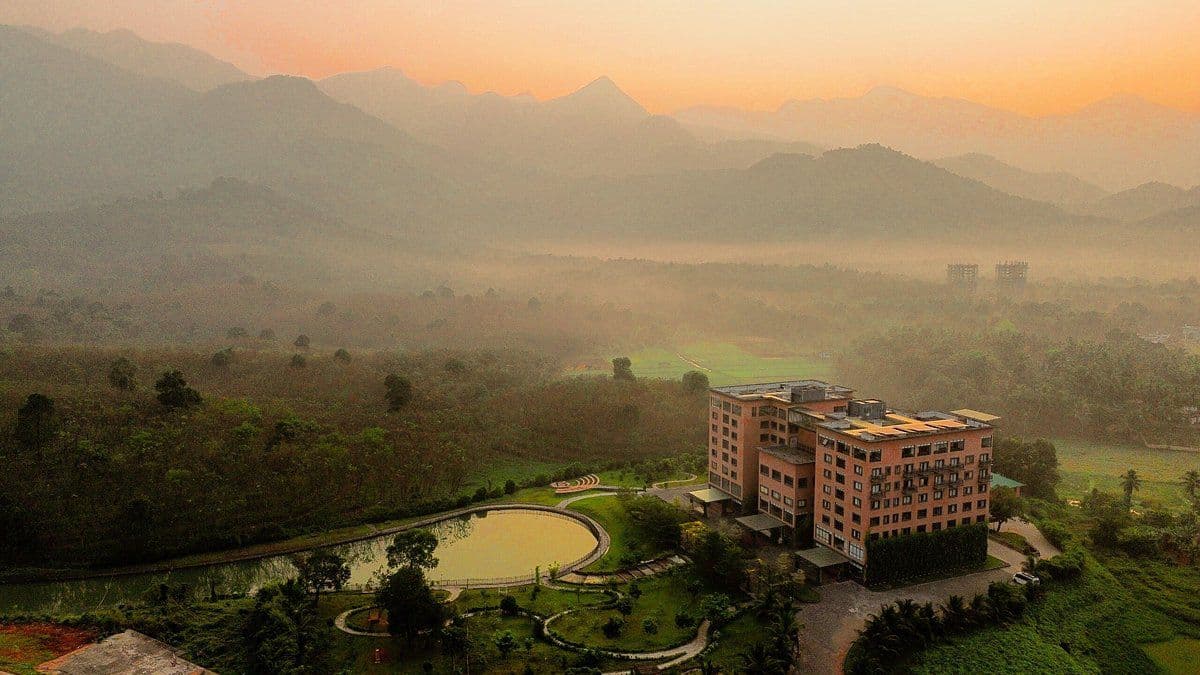
Stroke Rehabilitation Programme
Recovery After Stroke Is Possible. We've Seen It Happen.
Doctor-led stroke rehabilitation at Tigris Valley, Kerala — combining Ayurvedic neuro-rehabilitation, structured physiotherapy, and integrative medicine in a personalised programme.
Free doctor evaluation · Inpatient & residential programmes · 4.8★ rated · Kozhikode, Kerala
The First Six Months After a Stroke Are the Most Important of Recovery.
The brain has a remarkable ability to reorganise itself after injury — a phenomenon called neuroplasticity.
This is most active in the first 6 months after a stroke — which means what happens in this window has a lasting impact on how much function is regained.
Most hospitals discharge stroke patients once they are medically stable — not when they are fully recovered. The rehabilitation work — the work that determines long-term outcomes — begins after discharge.
A structured, intensive, and personalised rehabilitation programme in this window can make the difference between permanent limitation and meaningful recovery.
The goal of rehabilitation is not just survival. It is the fullest possible return to life.
Why Combining Ayurveda with Modern Rehabilitation Changes Outcomes
Standard post-stroke rehabilitation focuses primarily on physiotherapy and occupational therapy — which is essential, but incomplete.
Ayurvedic medicine has specific, centuries-validated protocols for paralysis and neuro-muscular rehabilitation — Navara Kizhi, Pizhichil, Thalam — that work on the nervous system, muscle tone, and circulation in ways that physiotherapy alone cannot.
At Tigris Valley, both systems work together — not as alternatives, but as complements. Your loved one receives the full benefit of both.
Ayurvedic Neuro-Rehab
Nervous system recovery, muscle tone restoration, circulation, cognitive function
Navara Kizhi, Pizhichil, Thalam, Shirodhara, Nasya
Modern Physiotherapy
Motor function, balance, gait, strength, range of motion
Daily structured physio, gait training, functional movement
Functional Medicine
Root causes: inflammation, metabolic health, brain nutrition
Biomarker review, anti-inflammatory diet, targeted supplementation
Speech Therapy
Communication, swallowing, language recovery (where available)
Daily sessions with trained speech therapist
Occupational Therapy
Daily living skills, hand function, independence restoration
ADL training, fine motor exercises
Psychological Support
Emotional adjustment, depression (common post-stroke), family dynamics
Counselling, guided meditation, caregiver support
Is Tigris Valley's Stroke Rehabilitation Programme Right for Your Loved One?
This programme is designed for:
- Stroke survivors who have been discharged from hospital and are in the active recovery phase
- Patients with hemiplegia (weakness or paralysis on one side) seeking structured rehabilitation
- Patients with speech, memory, or cognitive changes after stroke
- Patients who have completed standard physiotherapy but feel recovery has plateaued
- Families who want a structured, medically supervised residential rehabilitation environment
- Patients who want to combine Ayurvedic and modern rehabilitation approaches
Note on Medical Stability: We require a medical clearance from the treating neurologist before admission for patients within 4 weeks of stroke. Our team will coordinate with your doctor directly.
When to start:
Within 1–4 weeks of discharge
Ideal — begin rehabilitation while neuroplasticity is highest. Our doctors will review medical stability before starting therapies.
1–6 months post-stroke
Still highly effective. The window is open and structured rehab can produce significant gains.
6 months to 2 years post-stroke
Recovery is still possible. Progress may be slower but meaningful improvement is achievable with sustained effort.
More than 2 years
We will assess individually. Maintenance and quality-of-life improvement remain valid goals.
The Therapies Behind the Recovery
Your programme will draw from the following — your doctor selects and sequences the most relevant for the patient's specific condition and stage of recovery.
Navara Kizhi (Shashtika Shali Pinda Sweda)
A unique Ayurvedic therapy using boluses of medicated cooked rice applied warm to the body. Rebuilds muscle tone, nourishes nerves, improves circulation.
Specific to Ayurveda — no direct conventional equivalent. Widely used in Kerala for neuro-rehab for centuries.
Pizhichil (Taila Dhara)
Continuous pouring of warm medicated oil over the affected limbs and body. Deeply nourishing to nerves and muscles. Reduces spasticity and improves movement.
Particularly effective for hemiplegia and spasticity post-stroke.
Thalam
Medicated oil or paste applied to the crown of the head. Supports cognitive recovery, reduces anxiety, and calms the nervous system.
For patients with cognitive changes, memory issues, or emotional dysregulation post-stroke.
Shirodhara
A continuous, rhythmic stream of warm oil on the forehead. Profoundly calming — reduces anxiety, improves sleep, and supports brain recovery.
Especially useful for post-stroke depression and sleep disruption.
Nasya (Nasal Administration)
Medicated oils or preparations administered through the nasal passages — a direct pathway to the brain in Ayurvedic medicine.
For speech recovery, cognitive function, and facial muscle weakness.
Daily Structured Physiotherapy
Progressive physiotherapy programme starting from Day 2 — focusing on the specific deficits identified in the Day 1 assessment.
Daily sessions; programme adjusted every 3 days based on progress.
Gait Training & Balance Rehabilitation
For patients with walking difficulty — structured training to rebuild gait pattern, balance, and independence.
Available from Week 1 depending on patient condition.
Speech & Language Therapy
Daily sessions for patients with aphasia (language difficulties), dysarthria (speech difficulties), or dysphagia (swallowing difficulties).
Available on-site — confirm with team at time of booking.
Brain Nutrition Protocol
Anti-inflammatory therapeutic diet rich in Omega-3, antioxidants, and neuroprotective nutrients. Eliminates foods that increase inflammation and neurological stress.
All patients from Day 1.
Caregiver Training
A structured programme for the accompanying family member or caregiver — teaching rehabilitation exercises, safe handling, and home continuation of the programme.
Included in all programmes of 10 nights or more.
A Roadmap for Recovery at Tigris Valley
Days 1–3
Stage 1: Assessment & Initiation
Focus: Medical assessment, baseline mapping, gentle initial therapies
Doctor evaluation, Ayurvedic consultation, first gentle therapies. The body begins to settle into the healing environment.
Days 4–10
Stage 2: Active Rehabilitation
Focus: Daily structured physio + AM/PM Ayurvedic therapies + nutrition in full effect
The programme is in full motion. Progress is often visible within this window. Family members notice changes.
Days 11–21
Stage 3: Consolidation & Strengthening
Focus: Deepen gains, functional goal work, increase independence
Therapy intensity may increase. Focus shifts to functional goals — walking, speech, daily tasks. Progress is measured.
Final 2 days
Stage 4: Preparation & Handover
Focus: Discharge planning, caregiver training, home programme
Doctor debrief. Written home programme. Caregiver training session. Follow-up consultation scheduled.
30 & 60 days post-discharge
Follow-Up
Focus: Monitor progress, adjust home programme
Video consultation with the treating doctor. Adjust home exercises and diet based on progress.
Recommended Minimum Stay: For meaningful stroke rehabilitation outcomes, we recommend a minimum of 14 nights. Our doctors will advise based on the patient's condition and goals. Shorter stays (7 nights) are available for initial assessment and therapy initiation.
The Specialists Behind Your Loved One's Recovery
Stroke rehabilitation at Tigris Valley is delivered by a coordinated team — not individual practitioners working in isolation. Your loved one is reviewed by the full team every 3 days.
Medical Doctor (MBBS)
Overall clinical oversight — reviews all therapies, tracks neurological progress, coordinates the team, manages any medical concerns
Ayurvedic Physician (BAMS/MD Ayurveda)
Prescribes and supervises all Ayurvedic therapies — customises formulations for each patient
Physiotherapist
Conducts daily structured physiotherapy — designs and progresses the physical rehabilitation plan
Yoga Therapist
Adapted yoga for patients with limited mobility — breathing, gentle movement, and relaxation
Speech Therapist
Daily speech and language sessions for patients with communication or swallowing difficulties
Wellness Nutritionist
Designs the therapeutic diet — coordinated with Ayurvedic principles and functional nutrition
Caregiver Support Coordinator
Supports the accompanying family member — guidance, emotional support, and caregiver training
Stories of Recovery
Families who walked this road with us
Outcomes vary by stroke type, time-since-onset, and individual response. These are real journeys — shared with permission.
My father had his stroke in February. By week three when we reached Tigris his right side was completely flaccid and he could only manage two-word sentences. The first thing Dr. Mujeeb did was sit with our family for forty minutes — not with Appa, with us. He drew the brain on a sheet of paper and told us exactly what was possible and what wasn't. By week six, Appa was feeding himself with a spoon. By week ten he walked thirty steps unaided. The honesty was as healing as the therapy.
My wife is 41. The ischaemic stroke took her speech and the discharge summary from our hospital said to prepare for permanent expressive aphasia. The speech-language therapist at Tigris worked with her four times a day, every single day, for eight weeks. She now speaks in full sentences — slow and effortful, but full. Last Sunday she read our seven-year-old to sleep again. I do not have words for what that means.
Umma was 76 when she had her second stroke. The tertiary hospital that treated her said it was over — to take her home and manage comfort. We brought her to Tigris because we did not have anything else to try. Six weeks later she walks from her bed to the prayer mat on her own, sits down, and gets up without help. The physiotherapy team was relentless but never rough. They treated her like a person with a future, not a case file.
Names abbreviated and identifying details adjusted at families' request. Photographs withheld to protect patient privacy. Recovery timelines and functional outcomes are individual and not guaranteed.
Frequently Asked Questions
How soon after a stroke can rehabilitation begin at Tigris Valley?+
We accept patients from 1 week post-discharge, subject to medical clearance from the treating neurologist. Early rehabilitation (within the first 3–6 months) produces the best outcomes due to heightened neuroplasticity. Contact us and we will coordinate with your doctor.
Does the patient need to be mobile to come here?+
Not necessarily. We have accessible rooms and can accommodate patients with limited mobility, wheelchair users, and patients who require assistance with daily activities. Please inform us of the patient's current mobility level when you enquire so we can prepare appropriately.
Does a family member need to accompany the patient?+
For patients with significant mobility limitations or communication difficulties, we recommend a family member or caregiver accompany them for the first 5–7 days at minimum. We have accommodation arrangements for accompanying family members.
What level of improvement can we realistically expect?+
Outcomes vary significantly based on the type of stroke, extent of damage, and time since the stroke. We do not make specific outcome promises. What we can offer is a structured, intensive, evidence-informed programme that gives your loved one the best environment for recovery. Our doctors will give an honest assessment after the Day 1 evaluation.
Is Ayurvedic stroke rehabilitation scientifically validated?+
There is growing clinical research supporting specific Ayurvedic therapies for neuro-rehabilitation, particularly Navara Kizhi and Pizhichil. These have been practised in Kerala for centuries specifically for conditions involving paralysis. At Tigris Valley, these are combined with modern physiotherapy — so the patient receives both evidence streams.
How long should the rehabilitation stay be?+
We recommend a minimum of 14 nights for meaningful rehabilitation. 21 nights is optimal for moderate to severe presentations. 7-night stays are available for initial assessment and therapy initiation — with the understanding that the patient may need to return for a longer stay.
Can you communicate with the treating neurologist?+
Yes — and we welcome it. Our medical team is happy to liaise with the treating neurologist, share progress reports, and coordinate care. Please share the neurologist's contact details when you enquire.
What is the cost of the stroke rehabilitation programme?+
Programme costs depend on duration, room type, and therapy requirements. Please contact us for a detailed estimate. We are transparent about costs and there are no hidden charges.
The First Step Is Simply a Conversation.
Talk to our team. Tell us about your loved one's condition. We will tell you honestly whether our programme is the right fit — and if so, what recovery could look like.